 By
By 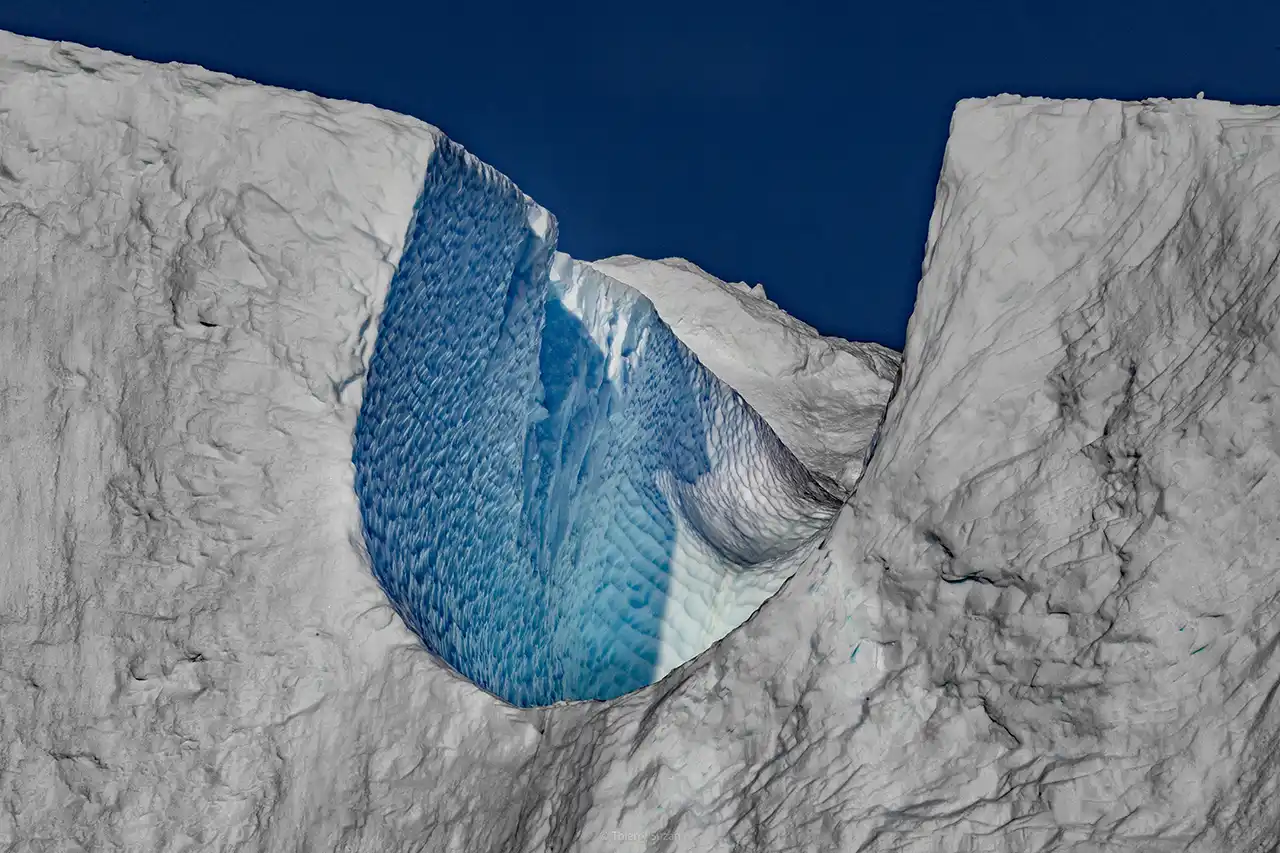
“Before long, the numerous flights of birds — puffins, petrels, and others peculiar to these desolate shores — indicated that they were approaching Greenland. The Forward was steaming rapidly north, leaving leeward a long cloud of black smoke.
[…]
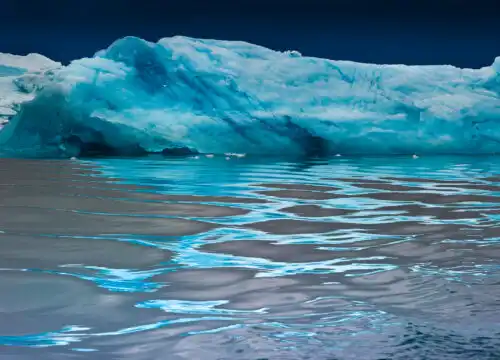
Towards evening, through a rift in the fog, the coast of Greenland was indistinctly visible at 37° 2′ 7″ longitude; the Doctor just caught a glimpse through his glass of a succession of peaks scored by wide glaciers — then the fog closed over it again, like a theatre curtain falling at the most interesting point of the play.
[…]
An hour before reaching the Forward, a phenomenon occurred which excited the Doctor’s astonishment to the highest degree. It was a veritable shower of shooting stars; they could be counted in their thousands, like rockets in a bouquet of fireworks, of a dazzling whiteness; the moonlight grew pale beside them. The eye could not weary of admiring the spectacle, which lasted several hours. A similar meteor had been observed in Greenland by the Moravian Brethren in 1799. It was as though the sky were holding a great celebration for the earth, beneath these desolate latitudes.”
Jules Verne, The Aventures of Captain Hatteras. Part One: The English at the North Pole,
Paris, J. Hetzel, 1866, Chapters VI and XXV
Between the Lines…
Published in 1866, The Adventures of Captain Hatteras is rooted in the nineteenth century’s fascination with polar exploration. At the time, Greenland and the Arctic remained largely uncharted territories — subjects of scientific speculation and stages for expeditions whose fate was often tragic.
Verne drew on the geographical and meteorological knowledge of his day to render with precision the natural phenomena of those extreme latitudes: the persistent fogs, the monumental glaciers, the northern lights that so captivated naturalists of the era. The Forward thus becomes the vehicle for a narrative in which scientific observation meets the raw power of the Arctic.