
 By
By 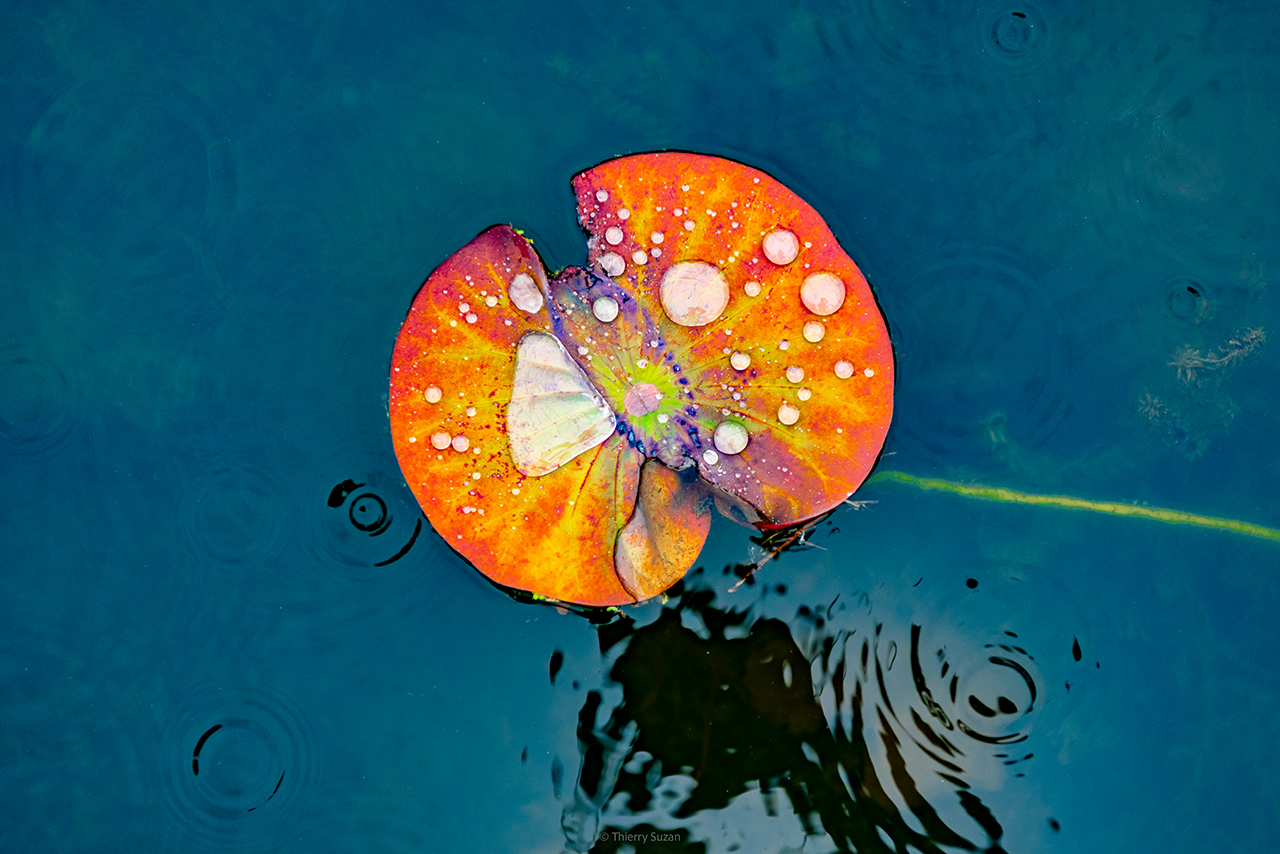
I give you, O traveler, when thirst overwhelms you —
says the joyful water — coolness for your throat,
rest for the birds, the silk of their plumage,
and on my banks I embroider, with my foam,
shimmering fabrics when my lyre sings.
I am the wandering soul that brings joy to the plain,
I rush toward the fields to find my rest,
I leap between the ravines and sing with the wind,
I mirror in my waters the vast firmament,
and I calm my course by becoming still water.
I am the wandering soul that brings joy to the plain,
I have my joys and I also raise my laments;
in acrobatic leaps I descend from the heights,
bathing the green moss that carpets the undergrowth,
and the clarity of stars trembles in my depths.
I scatter across the countryside a rain of pearls,
and, in the silence, I am a vibrating harp;
I make my orchestras of lyres resound in the night,
and my foam opens like a luminous brooch
that enamels the shifting shades of dawn.
Lisímaco Chavarría, Water Poem, translated from Spanish, after Tres poemas editados por Carlos María Jiménez G., 1964.
Between the Lines…
Published within the Hispanic poetic tradition of the early twentieth century, Poema del Agua illustrates the central place of nature in Lisímaco Chavarría’s imagination. Water is personified as a shifting entity, oscillating between momentum and stillness, becoming the vehicle for a worldview in which natural elements are endowed with their own sensibility.
Through this fluid figure, the poet inscribes his writing within an aesthetic of correspondence between humanity and its environment. Rivers, ravines, plains, and sky form a continuous space where matter is in constant transformation — reflecting an organic conception of landscape characteristic of a strand of Latin American poetry of his era.
Raised in modest circumstances and forced to leave school to work the soil, Chavarría learned the world through his hands before expressing it in words. Struck by tuberculosis, he died at thirty-five, having written everything in the margins of a precarious life. Poema del Agua bears its mark: it is not the gaze of a scholar observing nature, but that of a man who drank from its springs.