
 By
By Long imagined as a land frozen in both ice and time, the world’s largest island embodies the vulnerability of polar regions to climate change, as well as the fate of a people whose Inuit traditions stretch back millennia. Steeped in this memory, Greenlanders are now building their future at the crossroads of geopolitical pressures and environmental mutations, driven by a profound aspiration for independence.
A Day Without End
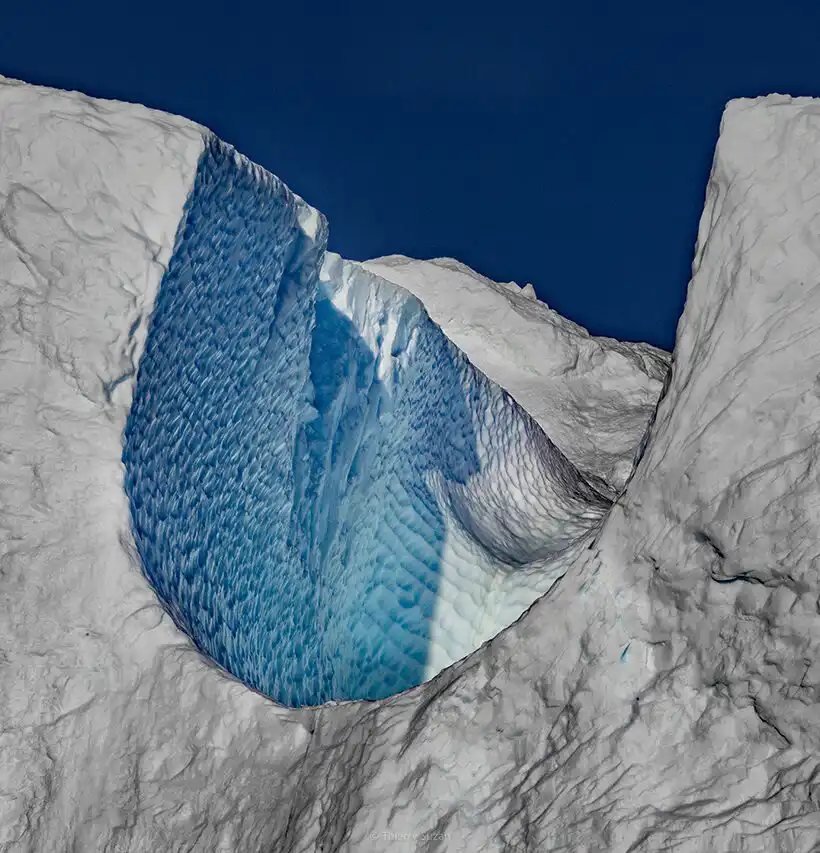
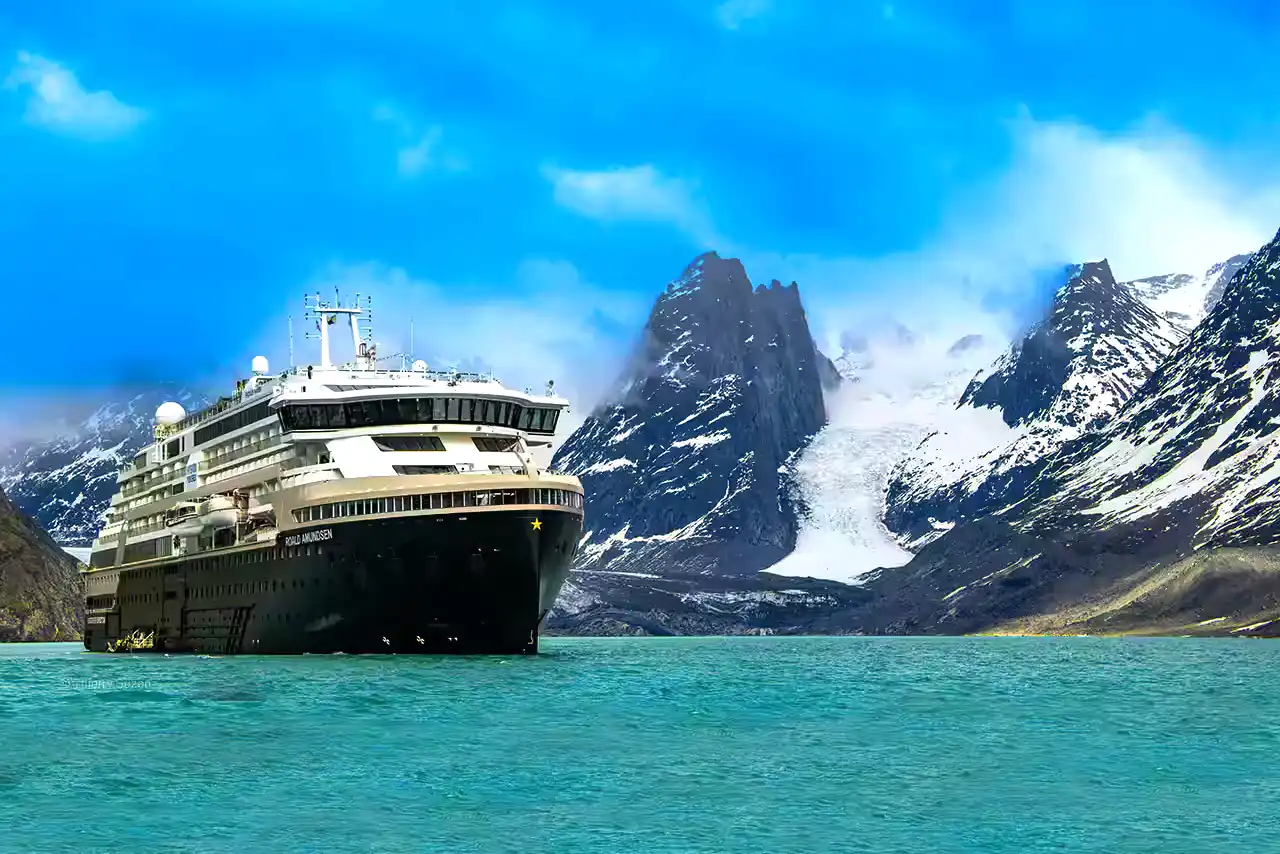
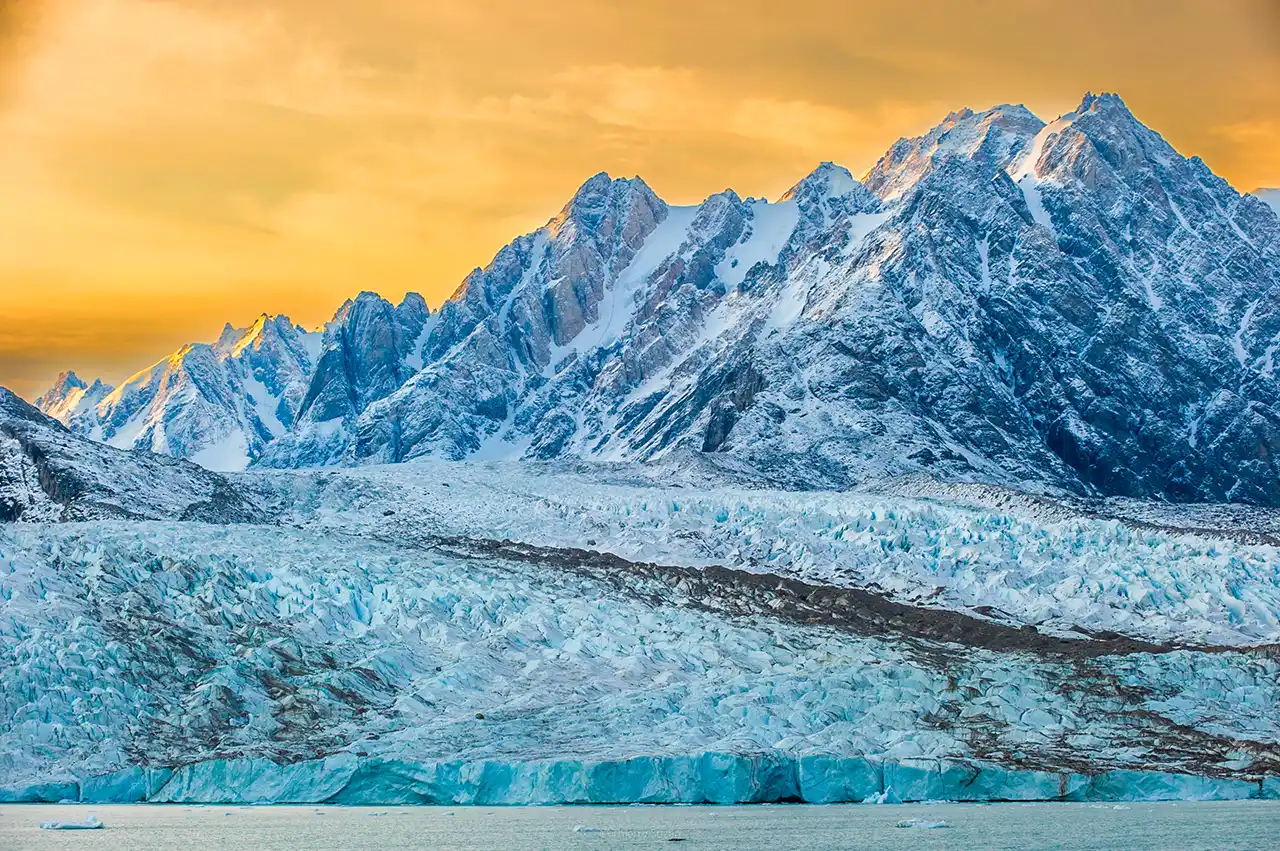
As a day without end begins, the ship glides between motionless icebergs and quivering hummocks. Ahead of the bow, ephemeral giants rise like sculptures of indigo ice. Gradually, the polar night fades into the summer light, perpetuating the unchanging cycle of the seasons. Colorful villages cling to granite walls, and wooden houses, overlooking the fjords, defy the fury of the winds. In this boreal vertigo, the soul awakens to contemplation, the gaze drowns in abyssal depths, and everything becomes breath: the wind on the skin, the salt on the lips, the foam beneath the hull, and the murmurs of the ocean, fleeting echoes of existence. Each iceberg is an enigma, each shard of ice an elsewhere to discover. Offshore, the song of whales vibrates beneath the pack ice. In the tundra, musk oxen exhale clouds of vapor wrapped in morning mist. A diaphanous plume rises at the horizon: the smooth back of a narwhal breaks the surface, its long ivory tusk glittering in the light before merging into the ocean swells. The water closes over its passage. Only silence remains. The world, for a moment, holds its breath.
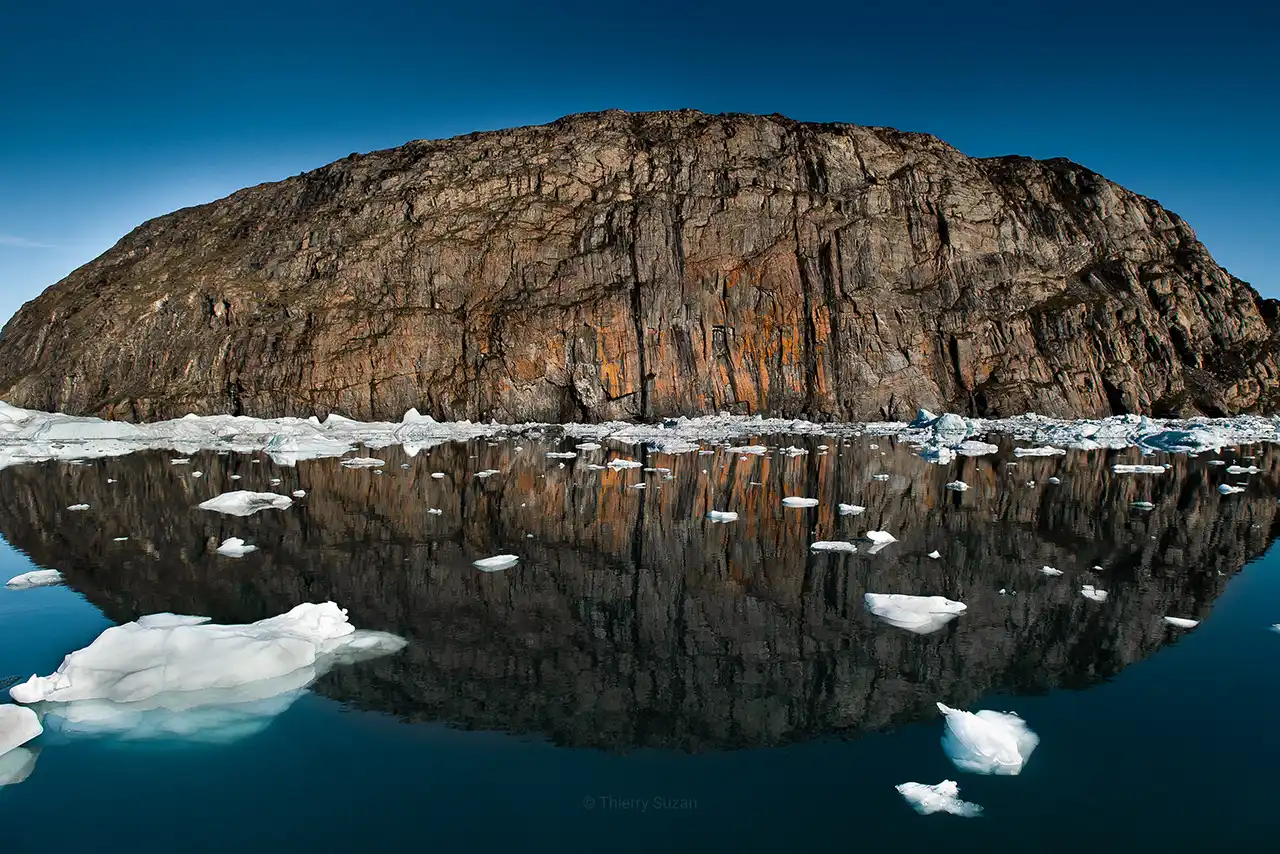 © Thierry Suzan · Akia Peninsula · All Rights Reserved
The Age of the Inuit
Kalaallit Nunaat — the land of the Greenlanders — is woven into the history of polar exploration. Several millennia before the arrival of the first Thule communities, the island was inhabited by Paleo-Inuit nomads, descendants of the great Arctic migrations. Confronted with the extreme conditions of the high latitudes, they developed hunting and fishing techniques and built societies adapted to the polar environment.
At the end of the tenth century, the island was colonized by the Vikings, formidable seafarers carried by Arctic winds and currents through perilous crossings. Among them, Erik the Red, banished from Iceland, founded several settlements on the southern and western coasts. These disappeared a few centuries later, most likely swept away by climate cooling, geographic isolation, and the exhaustion of resources. Their disappearance marked the end of Norse presence in Greenland. Drawing on their knowledge and mastery of survival skills, the Inuit, expanding since the thirteenth century, remained the sole inhabitants of the frozen land.
In the wake of the longships, other adventurers explored the edges of the ice sheet, in pursuit of glory and discovery. Some left their lives there, swallowed by the ice and by fame.
Each iceberg is an enigma, each shard of ice an elsewhere to discover.
Several centuries after the decline of the Viking colonies, the region came under Danish rule. The royal authorities extended their grip through the opening of trading posts and the administration of coastal villages. In the mid-twentieth century, Greenland officially became a province of the Kingdom of Denmark, but the territory remained isolated, far from the centers of power and the main economic circuits. The turning point came in 1979, when the island gained home rule following a local referendum. With this new status, Greenland can henceforth assert its identity and shape its own future.
Arctic Horizons
The rapid melting of the ice cap, the shrinking of seasonal sea ice, and the transformation of ecosystems are forcing Greenlanders to reinvent their daily practices and their way of life. These changes are calling into question the social and economic balances of island communities, disrupting organizational patterns established over centuries. The rise of tourism, the exodus of part of the younger generation, and the geostrategic ambitions of major powers over the territory’s underground wealth (rare earths, graphite, zinc, hydrocarbons) heighten the need to reconcile culture and adaptation. The retreat of the ice is facilitating resource extraction and making Greenland the pivot of an Arctic in full transformation. New maritime routes are opening up, and energy deposits are becoming accessible.
At the same time, local populations are actively engaged in the management of their territory. Following the 2021 legislative elections, they secured a moratorium on uranium mining, participated in the creation of marine protected areas in their territorial waters, and incorporated hunters’ observations into sea ice monitoring programs.
Beyond these protective measures, the energy transition is a structural priority, notably through the extensive use of hydroelectricity, which already powers a large part of the country, as well as the climate commitments of the capital Nuuk, targeting carbon neutrality by 2030. Greenland, the world’s leading exporter of halibut and a major player in northern shrimp fishing, is also multiplying community initiatives for sustainable development: artisanal fishing cooperatives in Tasiilaq, food production projects in Arctic conditions with greenhouses supplying fresh vegetables year-round.
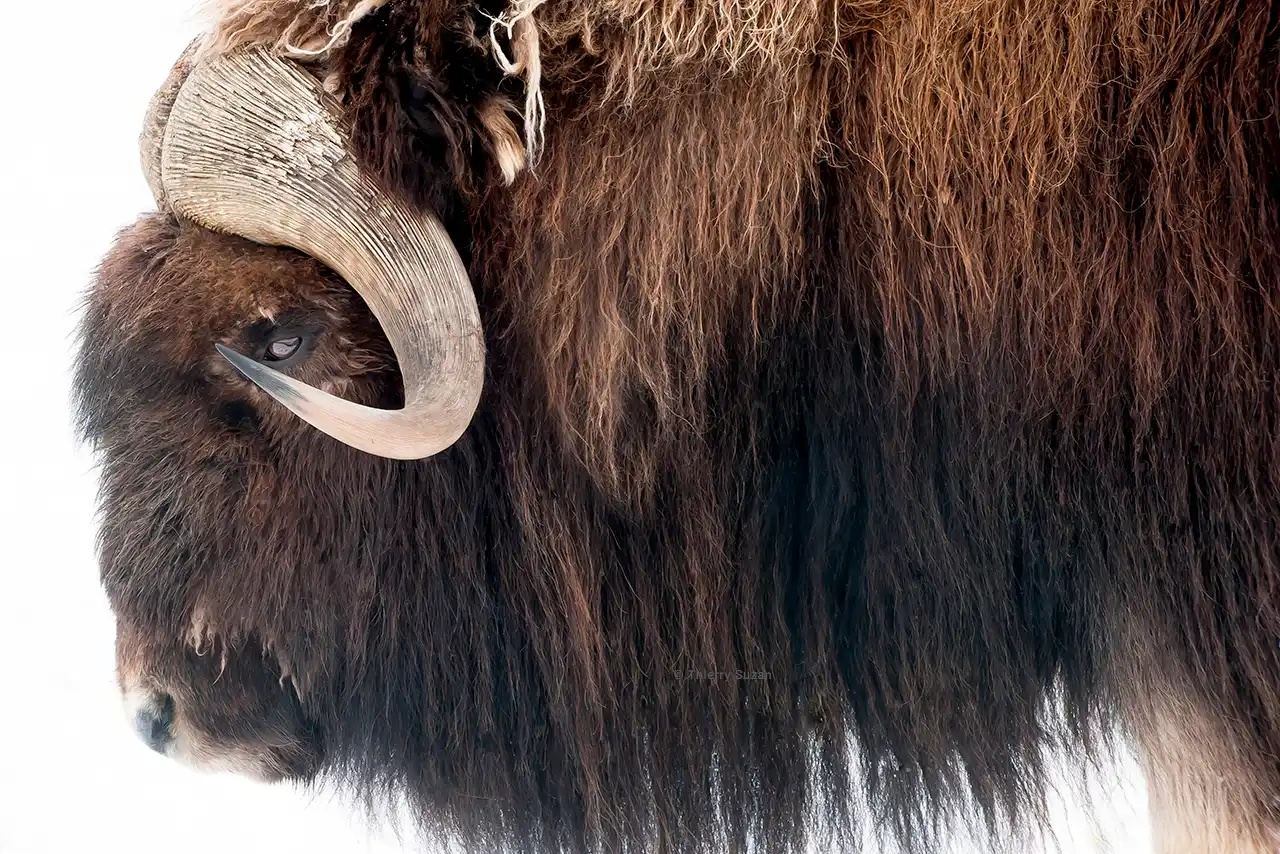
© Thierry Suzan · Musk Ox · All Rights Reserved
The visionary spirit of the Greenlanders, forged by centuries of adaptation, has allowed them to endure through time while preserving social cohesion. Inspired by a heritage of dialogue and solidarity, they have always favored the path of consensus over confrontation. By asserting their political choices and securing recognition of their rights in international arenas, the people of Greenland demonstrate that self-determination is not limited to governance, but rests on collective commitment and a responsibility toward future generations.
Greenland thus embodies a rare form of resilience: that of a people rooted in their traditions and their land, sustained by an enlightened pragmatism in the face of contemporary realities.
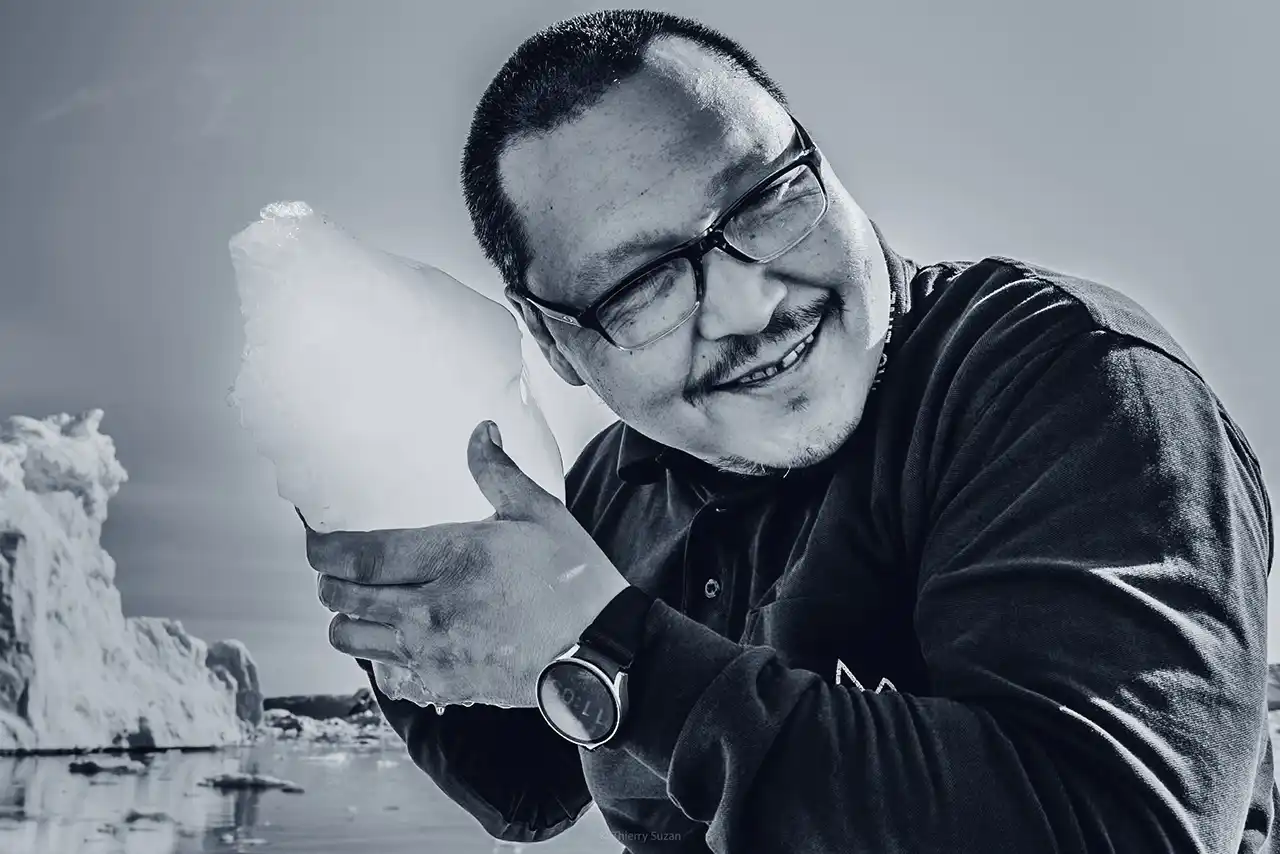
© Lead image · Thierry Suzan · Baffin Sea · All Rights Reserved